
It’s 4pm on a Thursday when the text comes through. The client you’ve been chasing for three months just confirmed. They can meet tomorrow at their office, 9am. Can you bring something to leave with them?
You look at your desk. No business cards. The last box ran out two weeks ago and nobody ordered more because everything’s digital now. Your marketing materials are PDFs. Your proposals live in Google Drive. Your contact details are on LinkedIn.
None of which helps when you’re standing in someone’s office and they ask if you’ve got a card they can pass to their operations manager who handles these decisions.
This scenario plays out in businesses across Australia every week. Not because companies don’t understand the value of print. Because they’ve been told print doesn’t matter anymore, right up until the moment they desperately need it.
Digital works brilliantly for planned interactions. Scheduled meetings where both parties sit down with laptops open. Email introductions with time to type out details. LinkedIn connections made deliberately.
But a surprising amount of business still happens in situations where digital breaks down:
In these moments, businesses that can hand over something physical have a distinct advantage. This is because print works in contexts where digital is impractical or awkward.
| Item | When it’s needed | Why it works |
|---|---|---|
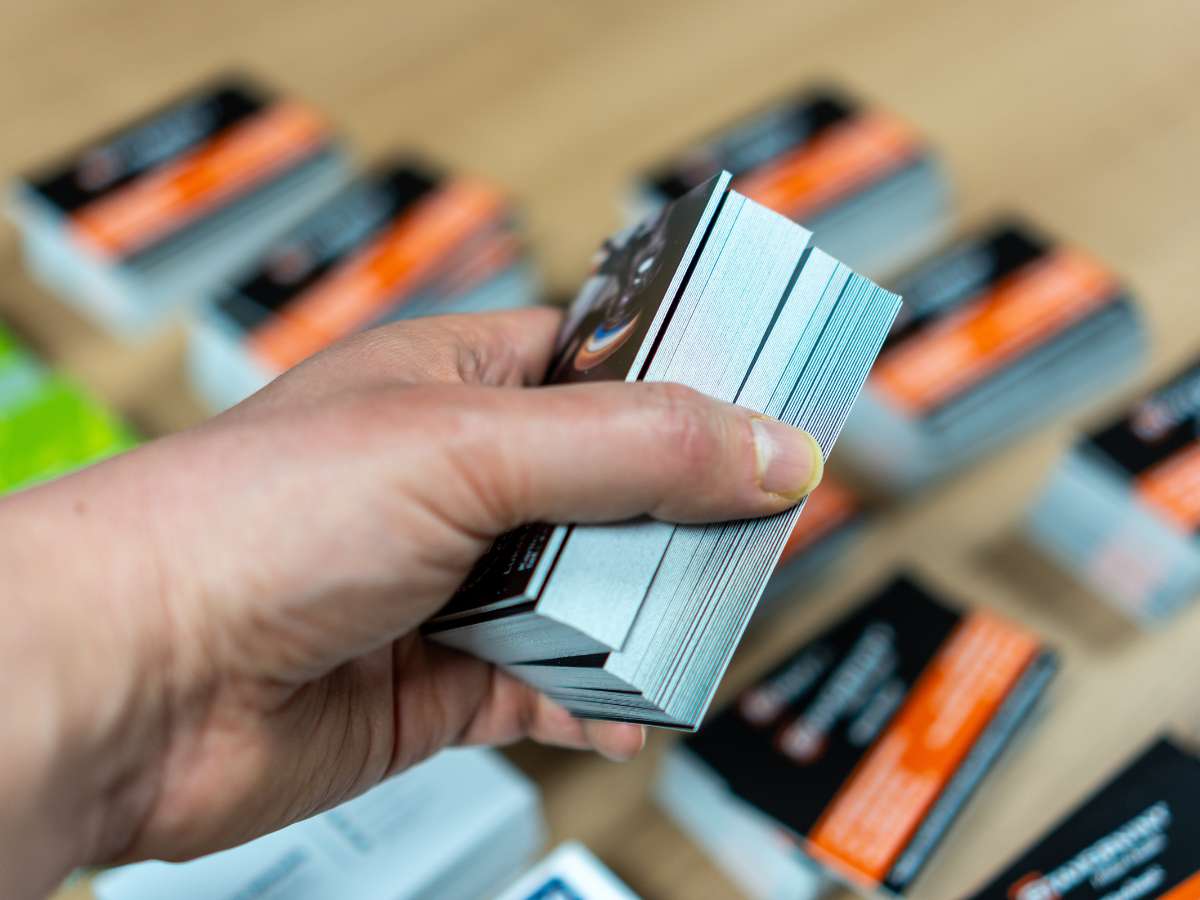
| Business cards | Sales meetings, networking, referrals | Enables follow-up without both parties needing devices |
| Flyers/menus | Shopfront, events, community boards | Visible when digital won’t be seen |
| Urgent documents | Contracts, permits, compliance | Required to proceed with work |
| Site signage | New locations, events, temporary setups | Directs people when they’re already in motion |
| Presentation materials | Pitches confirmed with short notice | Supports conversations that need visual aids |
The pattern is clear: people print things that solve immediate problems in specific contexts, not things that could theoretically be useful someday.
Business cards should be obsolete by now. We’ve had smartphones for 15 years. Contact sharing is built into every device. QR codes exist. LinkedIn works.
Yet businesses keep ordering cards, and the reason isn’t nostalgia.
Business cards solve a specific problem that digital tools still handle poorly: enabling someone who isn’t present to contact you later.


Someone meets you at a function. They don’t need your services, but they know someone who does. They want to connect you.
The card does the work. The referral happens without the original contact needing to remember details or manage an introduction. For sales-focused businesses, this difference is often worth hundreds of times the cost of the cards.
The most common error businesses make is ordering the wrong things at the wrong time.
Need: Something that makes follow-up possible
Solution: Business cards (or contact details printed urgently)
Why: The sale dies if the person can’t reach you later
Need: Directional signage or location information
Solution: Printed signs, maps, or directional materials
Why: Customers can’t buy if they can’t find you
Need: Contracts, permits, compliance documents
Solution: Whatever document is required to proceed
Why: Work can’t start without proper paperwork
Everything else can probably wait. If it’s not enabling follow-up, directing people to you, or legally necessary, it’s likely not urgent enough to warrant rush printing.

The businesses that avoid this pattern treat business cards like they treat other business essentials. Not as marketing materials that get ordered when campaigns run, but as operational necessities that get restocked before they run out.
This means: - Ordering cards in quantities that last 3-6 months - Reordering when the box is half empty, not when it’s gone - Having a backup person who can place orders if the primary contact is away - Keeping track of how quickly they’re being used (faster usage often means business is growing)
The direct cost of business cards is minimal. A box of 500 single sided cards might cost $50-$100 depending on quality and finish. That’s 10-20 cents per card.
The cost of not having cards when you need them is harder to quantify but often substantial. A lost referral. A sale that doesn’t close because follow-up never happens. A connection that fizzles because contact details got lost.

The $5,000 sale cost 10 business cards (gave extras to each person to pass on). The ROI isn’t even calculable because the cost was so minimal compared to the return.
This pattern repeats across different industries and business types. The businesses that consistently convert casual conversations to actual sales tend to be the ones that make follow-up frictionless. And in many contexts, a physical card is still the lowest-friction option available.
Business cards aren’t always the priority. Some businesses need different print items urgently:
The determining factor is simple: what will people need in their hands to make the next step happen?
For a cafe opening next week, that’s menus. For a contractor starting a job, that’s contracts. For most businesses selling through relationships and referrals, that’s cards.

Before ordering anything on a tight deadline, one question clarifies whether printing is actually necessary:
If everything stays digital, does this interaction still achieve what it needs to achieve?
If the answer is yes, printing is probably unnecessary. Send the email. Share the Google Doc. Use the tools that are already working.
If the answer is no, identify the specific gap that print fills, then print only that item.
Example: Meeting tomorrow with a potential corporate client who needs to see case studies.
Digital approach: Bring laptop, show examples on screen during meeting, email PDF afterwards. Result: Works fine. Printing unnecessary.
Different meeting: Quick introduction at a conference where the person wants to pass your details to their procurement team.
Digital approach: Email details to them for forwarding. Result: Probably gets forgotten or lost in their inbox. Print approach: Hand them three business cards, suggest they pass them to the relevant people. Result: Follow-up more likely to happen.
The difference isn’t about print being inherently better. It’s about matching the tool to the context.
Companies that handle last-minute printing well tend to have a simple system:
Always in stock: - Business cards (primary contact) - Business cards (key team members who meet clients)
Ordered as needed: - Everything else
This removes the panic from unexpected opportunities. Someone can attend a last-minute event, meet a potential client, or handle an unplanned introduction without scrambling.
The cost of maintaining this system is minimal. The cost of not having it is often a missed opportunity that was entirely preventable.

Businesses that convert casual conversations to actual sales tend to follow a predictable approach to print:
This isn’t about being print-focused or print-adverse. It’s about understanding which contexts require physical materials and which don’t, then being prepared for both.
The businesses that struggle are usually the ones at either extreme: either they’ve eliminated all print and scramble when they need it, or they print everything and end up with storage rooms full of outdated materials nobody uses.
The businesses that succeed have worked out the middle ground. Print what matters. Keep the essentials in stock. Don’t rush things that can wait.
And when in doubt, make sure the business cards haven’t run out. Because that’s usually the print job that actually saves the sale.