
A senior partner asks you to “run a direct mail to our customer base before EOFY.” You’ve never briefed a mailhouse. The first quote comes back with a line item for AMAS, another for DPID barcoding, a third for PreSort lodgement, and a question about whether you want Promo Post. You nod politely and start Googling.
This is the position most marketing managers and office managers in Melbourne find themselves in when their business runs a direct mail campaign for the first time. The strategy works. The operational mechanics are the unfamiliar part.
Elgin Printing has run mailhouse and commercial printing services from Carlton for over 50 years. The questions we field on a first direct mail brief are usually the same. This article covers what a mailhouse does, what postage discounts you’ll qualify for, what a campaign costs, and how to plan a first mailout without burning a budget.
The case for direct mail isn’t sentimental. It’s the response rate gap. The 2025 ANA Response Rate Report, still the most cited industry benchmark heading into 2026, puts the average direct mail response rate at 4.4% across industries. Email sits at 0.12%. By that measure, a piece of physical mail generates roughly 37 times more responses than the equivalent email send.
Two things drive that gap.
The trade-off is cost per piece. Direct mail runs roughly $0.30 to $2.00 per piece depending on format, list quality, and quantity. Email runs cents. The maths still works for Melbourne businesses with a defined customer base, a meaningful average order value, or a high-value B2B audience.
Direct mail’s response rate compensates for the higher per-piece cost. For a low-value, high-volume product where every customer is worth $20, email is usually still the right call.
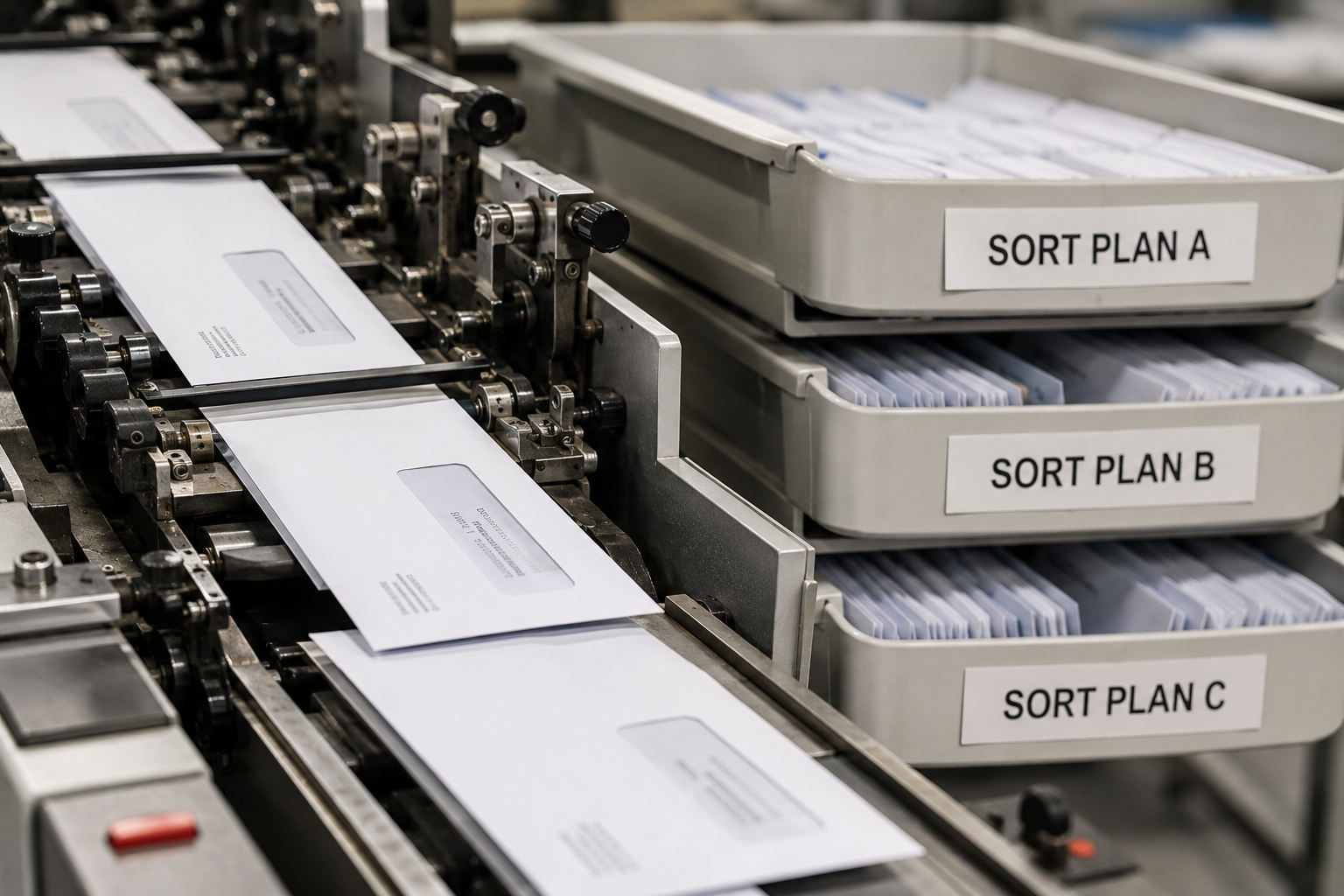
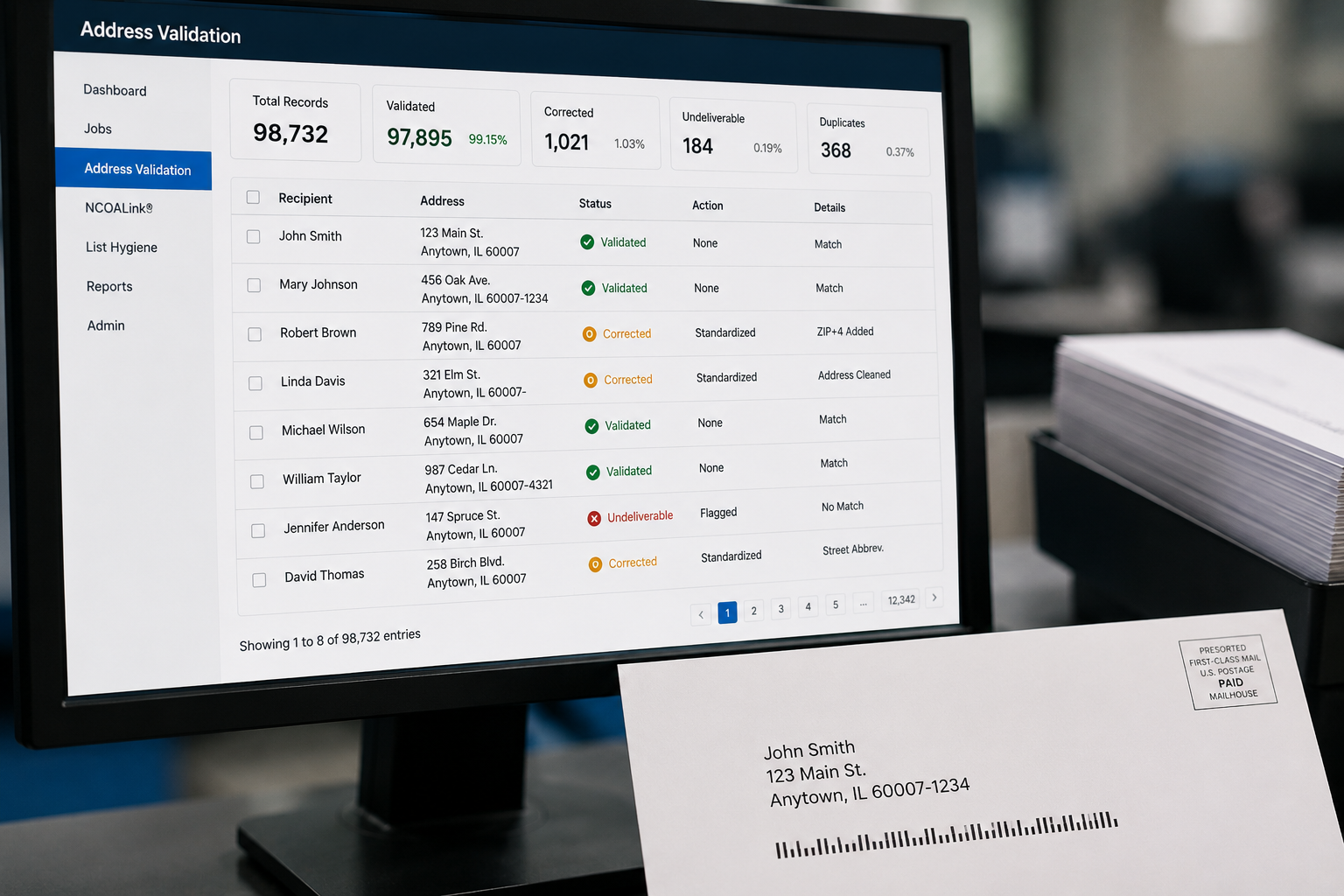
A mailhouse takes a database, a print job, and a campaign goal, and produces sorted, barcoded, lodged mail ready to drop into the Australia Post network. Most marketers underestimate how much of the work is data, not printing.
A standard mailhouse job involves:
The work between “here’s our customer list” and “your letters are with Australia Post” is where most of the cost sits. The printing itself is often the cheapest line item.
Elgin runs the full process in-house from Carlton: printing, database work, inserting, sorting and lodgement. The work doesn’t move between facilities, which keeps the timeline tight and the data secure.
Postage is usually the largest line item in a direct mail budget. Understanding the discount structure matters before you commit to a campaign size.
The full retail rate for a small letter, called the Basic Postage Rate or BPR, is $1.70 as of mid-2025. Australia Post has lodged a draft price notification with the ACCC proposing to lift the BPR to $1.85 from mid-to-late 2026, pending approval. PreSort Letters and other business products are also flagged for increases over the same window.
If you send 300 or more machine-addressed sorted items in a single lodgement, you qualify for PreSort Letters rates. Barcoded PreSort attracts a deeper discount than unbarcoded PreSort, because Australia Post’s machines can process barcoded mail without manual handling. Regular delivery (3 to 6 business days for most metro addresses) is cheaper than Priority delivery.
If the content is promotional, a third discount layer applies. Promo Post sits underneath barcoded PreSort regular rates and offers a further discount for content that meets Australia Post’s promotional classification. Examples include advertising letters, two-for-one offers, event invitations to existing customers, loyalty program offers, and product catalogues. Transactional mail (invoices, statements, account notices) doesn’t qualify.
The discount structure stacks as follows:
| Service tier | What it requires | Typical use case |
|---|---|---|
| Basic Postage Rate | Single stamp, no sorting required | One-off business letters |
| PreSort Unbarcoded | 300+ machine-addressed sorted items, no DPID barcode | Bulk mail without AMAS-certified data |
| PreSort Barcoded | 300+ sorted items with DPID barcode generated by AMAS-certified software | Most commercial direct mail campaigns |
| Promo Post | Barcoded PreSort plus content that meets Australia Post's promotional classification | Advertising letters, two-for-one offers, event invitations, loyalty offers |
Your mailhouse will quote postage based on the deepest discount you qualify for. The difference between BPR and Promo Post on a 5,000-piece campaign is significant, often enough to fund the printing.
The honest answer is “it depends on the format and the list”, but the structure of the cost is consistent. A typical Melbourne direct mail campaign breaks down as follows:
| Cost component | Typical range | Notes |
|---|---|---|
| List rental or cleaning | $0.05 – $0.35 per record | Lower for in-house lists, higher for rented prospect lists |
| Design (one-off) | $500 – $3,000 | Skipped if you supply finished artwork |
| Printing | $0.15 – $0.80 per piece | Postcards at the low end, letters with envelopes higher |
| Mailhouse processing | $0.10 – $0.40 per piece | Database work, barcoding, inserting, lodgement documents |
| Postage | $0.80 – $1.50 per piece | Promo Post barcoded PreSort at the low end, full BPR at the high end |
For a Melbourne business mailing 5,000 letters to a clean house list with a promotional offer, an end-to-end cost in the $1.20 to $1.80 per piece range is realistic. For a postcard-only campaign to the same list, $0.60 to $1.00 per piece is achievable. Numbers move with quantity, format and complexity. A quote against your actual brief is the only way to land on a real figure.
The ROI maths is straightforward. If your average customer is worth $400 and your conversion rate on responses is 30%, you only need a 1% response rate on 5,000 pieces to land 50 responses, 15 conversions, and $6,000 in revenue against a $7,500 campaign cost. At the ANA benchmark 4.4% response rate, the same campaign produces 220 responses, 66 conversions, and $26,400 in revenue: a 250% return on cost. The economics work or they don’t depending on customer value, not on direct mail being inherently expensive.
Most first-time mailouts go sideways for the same reasons. The list is dirty. The offer is vague. The reply mechanism is unclear. The timing clashes with EOFY or Christmas mail volumes and the campaign lodges late. Each of these is preventable with a clean brief.
Before you brief a mailhouse, have these decided:
A good mailhouse will walk through this list with you on a first call. If a printer quotes on volume and price without asking about your offer, your list, or your tracking mechanism, you’re being treated as an order, not a campaign.
Not every business should mail. Direct mail underperforms for products with very low average order value, where the per-piece cost can’t be recovered, and for purely transactional reminder content where SMS or email is faster and cheaper. It’s also a poor fit for audiences who have explicitly opted out of marketing mail.
Direct mail also struggles when a business has no real customer database. There’s no way to target a meaningful list, and rented prospect lists in unfamiliar industries produce weak response. The format won’t work either when the offer requires real-time interaction or when the campaign needs to launch within 48 hours. Lead times for a properly briefed mailout sit at 2 to 4 weeks. If you need response by Monday, mail isn’t the channel.
The strongest direct mail use cases for Melbourne businesses tend to follow patterns. Re-engaging lapsed customers with a specific offer. Inviting existing clients to a launch or event. Announcing a new location to a defined catchment. Pushing a B2B audience that won’t respond to email cold outreach but will read a posted letter from a named sender.
Direct mail rewards businesses that prepare. The ones that don’t run their first campaign without a clean list, an unclear offer, or a vague tracking plan, then conclude direct mail doesn’t work. The format works. The execution is what fails.
If you’re planning a mailout in the second half of 2026, the proposed BPR increase to $1.85 from mid-to-late 2026 changes the per-piece economics. A campaign locked in while the current $1.70 BPR and the existing PreSort and Promo Post rates still apply will land at a measurably cheaper unit cost than the same campaign run after the price rise takes effect. Elgin Printing has handled mailhouse and commercial printing services from Carlton for over 50 years. Call us before you brief, and we’ll walk you through list, format, postage tier and timing in a 20-minute call.